


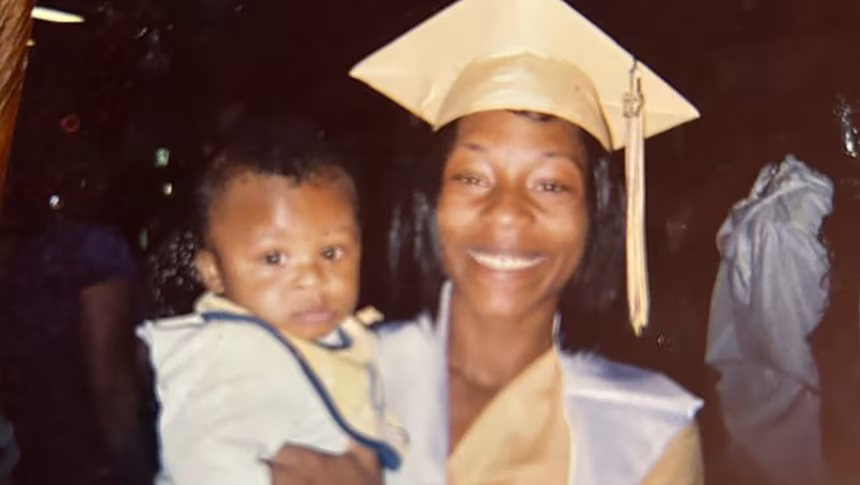
Sonya Massey should still be alive. Today’s verdict is a step towards accountability, but it cannot be where justice ends.
Today, we applaud the guilty verdict in the trial of former Sangamon County Sheriff’s Deputy Sean Grayson, convicted for killing 36-year-old mother Sonya Massey, fatally shot after calling 911 for help.
The officers who testified were visibly horrified by Grayson’s conduct, which tells you how egregious this was. Ms. Massey’s death is the result of an officer who should have never been hired and a system that consistently fails to treat mental health crises with compassion instead of violence.
The Sonya Massey Act, which takes effect January 1, 2026, aims to close gaps in hiring oversight that allowed Grayson, who had prior disciplinary issues at other agencies, to continue working in law enforcement. Similar policies are urgently needed in every state to track decertified officers, improve background checks, and prevent “wandering officers” from bouncing between departments.
While this verdict brings a measure of justice, lasting change requires federal and state investment in non-police emergency response systems, crisis intervention training, and community-based safety infrastructure.
Thousands of people experiencing mental health crises encounter police every year—often with deadly outcomes. True public safety depends on sending the right response at the right time: trained mental health professionals, peer responders, and unarmed crisis teams who can de-escalate mental health crisis calls without fear or force.
These investments should be part of a national strategy to strengthen civilian-led alternatives like mobile crisis units and community mental health centers. These approaches not only save lives but also save taxpayers money as billions of public dollars are spent on incarceration, litigation, and settlements stemming from preventable police violence like what Sonya Massey experienced.
Today is a step towards accountability, but it cannot be where justice ends.