


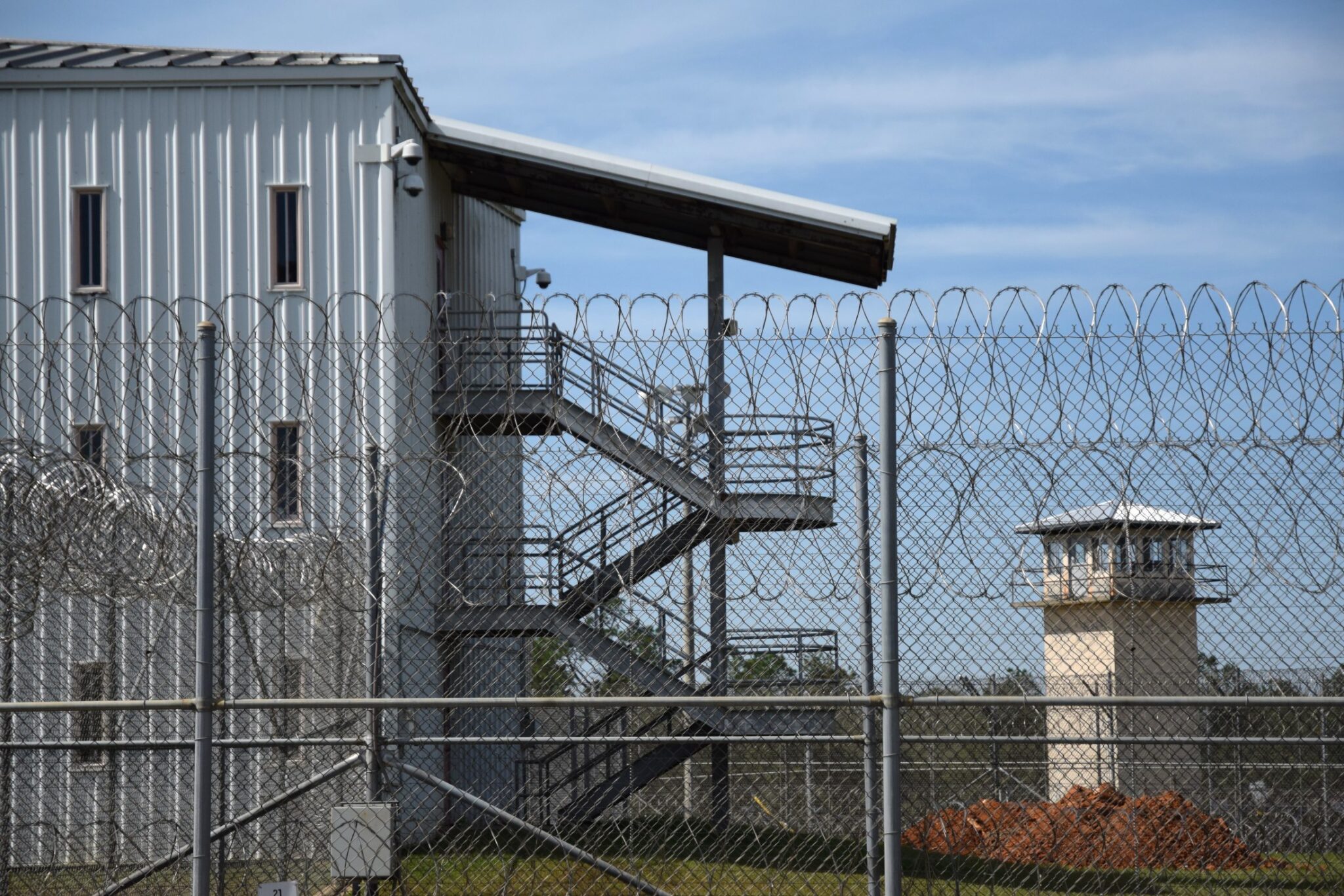
The National Police Accountability Project (NPAP), alongside co-counsel Menefee Law, announces a successful settlement in Renney v. Alabama Department of Corrections, a federal civil rights case brought against the Alabama Department of Corrections (ADOC) and Wexford, its contract medical provider on behalf of Joseph Allen Renney. While the terms of the settlement are confidential, the resolution marks a meaningful victory for justice and the constitutional rights of incarcerated people subjected to grossly inadequate medical care.
In 2021, Mr. Renney, an Alabama man incarcerated at Limestone Correctional Facility, suffered a series of preventable and worsening diabetic foot infections that ultimately led to multiple amputations of his left foot—losing all toes and part of the foot—because ADOC and Wexford repeatedly delayed or denied appropriate medical treatment. Despite repeated recommendations from outside medical specialists that urgent surgical intervention and appropriate antibiotic therapy were necessary, Mr. Renney was left to deteriorate for more than a year before receiving adequate care.
The complaint filed in March 2023 alleged that ADOC and Wexford demonstrated deliberate indifference to Mr. Renney’s serious medical needs in violation of the Eighth Amendment to the U.S. Constitution, which prohibits cruel and unusual punishment, and as a result contributed to permanent bodily harm.
“Today’s resolution represents a critical moment for Mr. Renney and for all people languishing in a prison system that treats basic healthcare as optional rather than a constitutional right,” said Lauren Bonds, one of Mr. Renny’s co-counsel and the Executive Director at NPAP. “This settlement underscores the urgency of addressing systemic medical neglect within Alabama’s prisons—a crisis that courts, advocates, and investigative reporting have documented as widespread and ongoing.”
Alabama’s prison system has faced intense scrutiny for decades due to persistent violence, neglect, and constitutional violations. Independent reporting from the Equal Justice Initiative revealed that correctional facilities in the state have among the highest death rates in the nation, and that the Alabama Department of Corrections has repeatedly failed to protect incarcerated people from harm or provide constitutionally adequate medical care.
“Mr. Renney’s case is not an isolated incident—it reflects a broader crisis of neglect in facilities where understaffing, overcrowding , and inadequate healthcare create conditions incompatible with safety and human dignity,” Lauren Bonds added.
NPAP’s co-counsel program exists to support civil rights attorneys in complex litigation against law enforcement, corrections agencies, and private contractors who operate inside detention systems. By providing financial, investigative, and strategic support, the program enables lawyers to pursue cases their clients deserve, even when the resources required exceed what a solo practice can typically marshal. This settlement is a testament to the strength of collaborative civil rights litigation and the impact of targeted co-counsel support.
“Co-counseling made it possible to see this case through to a resolution that affirms the rights of incarcerated people to basic medical care, and to push back against systems that too often allow neglect to become the norm,” said Andrew Menefee, a NPAP member and co-counsel attorney for Mr. Renney.
The National Police Accountability Project remains committed to holding correctional systems accountable for constitutional violations and to supporting attorneys who bring forward claims on behalf of people whose health, rights, and lives have been endangered and diminished by state action or inaction.