


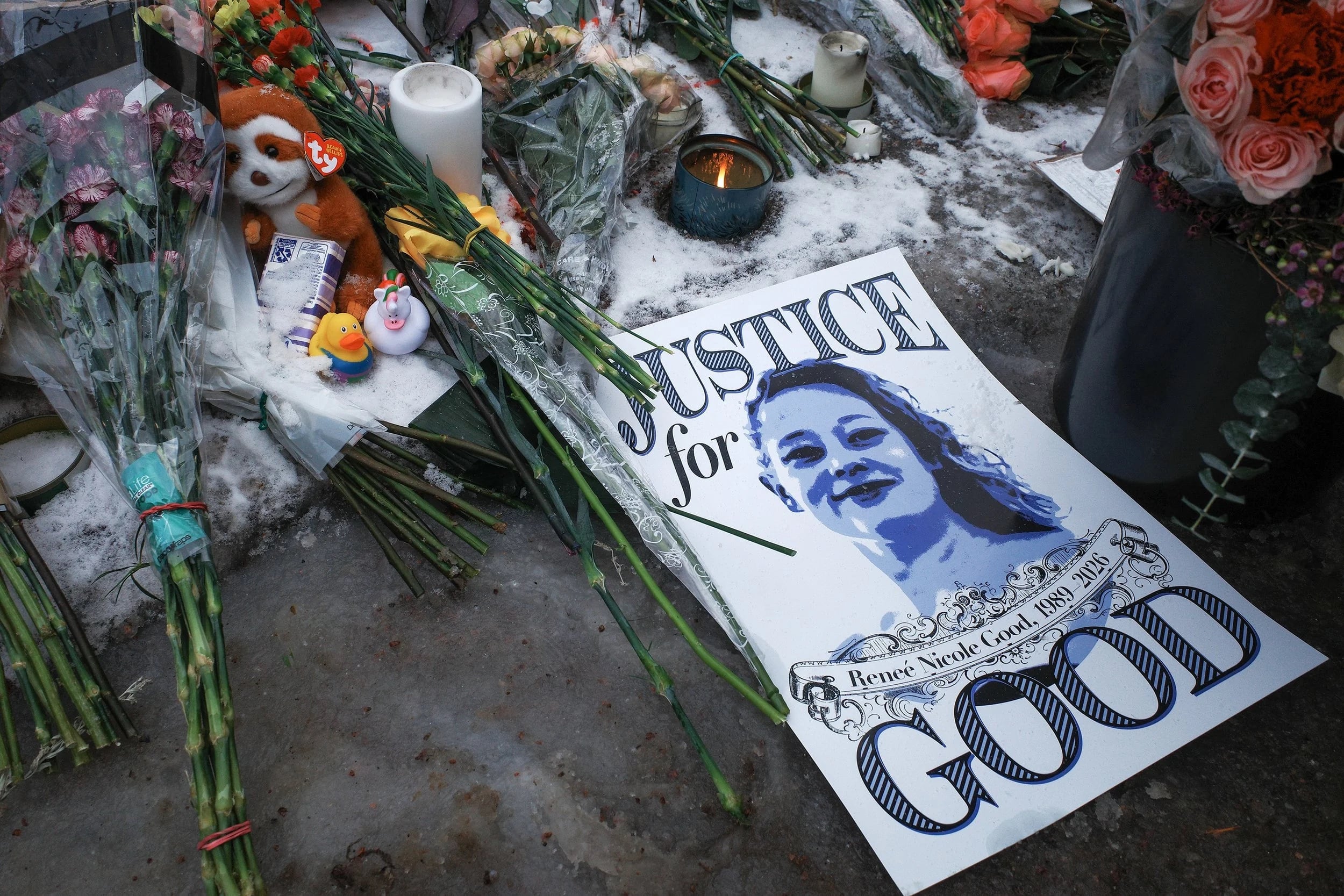
The National Police Accountability Project condemns the fatal shooting of 37-year-old Renee Good by ICE agents today in Minneapolis during a federal immigration crackdown by the Trump Administration. Based on publicly available video footage and reporting, the woman does not appear to pose an immediate threat to the safety of the agents or the public. A federal immigration operation that results in the death of a civilian is not public safety—it is a profound failure of judgment and the rule of law.
This killing highlights the dangerous consequences of federal immigration crackdowns and large-scale federal law enforcement deployments in cities across the country. These operations are repeatedly peddled by President Trump and administration officials as necessary to increase safety, yet they often produce the opposite outcome: escalating encounters, destabilizing communities, and exposing civilians to lethal force by federal agents who are not trained or equipped to conduct traffic stops or other standard policing activities.
Under well-established federal civil rights protections, law enforcement officers—including federal agents—are prohibited from using deadly force against a fleeing person unless that individual poses an immediate threat of death or serious bodily harm to the officer or others.
Federal courts across the country have made clear that shooting into or at a moving vehicle is particularly dangerous and rarely justified, especially where the vehicle is not being used as a weapon and does not pose an imminent risk to public safety. Deadly force is not automatically permitted to prevent escape, nor as a response to noncompliance alone.
The footage of this incident raises serious concerns about whether that legal standard was met. Local and state prosecutors must conduct a thorough, independent investigation and determine whether criminal charges are warranted. Federal agents are not above the law, and immigration enforcement authority does not confer immunity from accountability when deadly force is unjustified.
This tragedy also underscores deeper structural concerns about the role of ICE in local communities. Unlike local law enforcement—who themselves receive insufficient training in de-escalation—federal immigration agents are typically not trained to manage civilian encounters in densely populated urban environments. Deploying them under the guise of “public safety” increases the risk of unnecessary escalation and deadly outcomes.
NPAP has long warned that federal law enforcement deployments in cities—particularly those tied to immigration enforcement—erode trust, heighten fear, and expose residents to grave civil rights violations. Communities are safer when resources are invested in services, stability, and accountability—not when heavily armed federal agents are dropped into their neighborhoods. We call on all local and state leaders to reevaluate cooperation with federal immigration enforcement and to take concrete steps to protect residents from reckless federal operations.
NPAP has published guidance for communities, advocates, and officials navigating these deployments, including our Know Your Rights Guide on Federal Law Enforcement Deployments and Choosing Resistance: A Brief Guide for Local Action Against Federal Law Enforcement and National Guard Deployments, which outline the real risks posed by these operations and the tools available to limit harm.
A woman is dead in Minneapolis today because federal agents were deployed into a community under a false promise of safety. That reality demands accountability, transparency, and an end to dangerous federal crackdowns that put lives at risk.